
Condition review
Affected roof areas, nearby materials, transitions, accessories, and relevant interior evidence.
Residential roofing service
Wind and hail affect roofs differently. Wind can lift or crease shingles and disturb sealed edges; hail can bruise the shingle mat and mark soft metal accessories. Both require a close inspection rather than a ground-level guess.
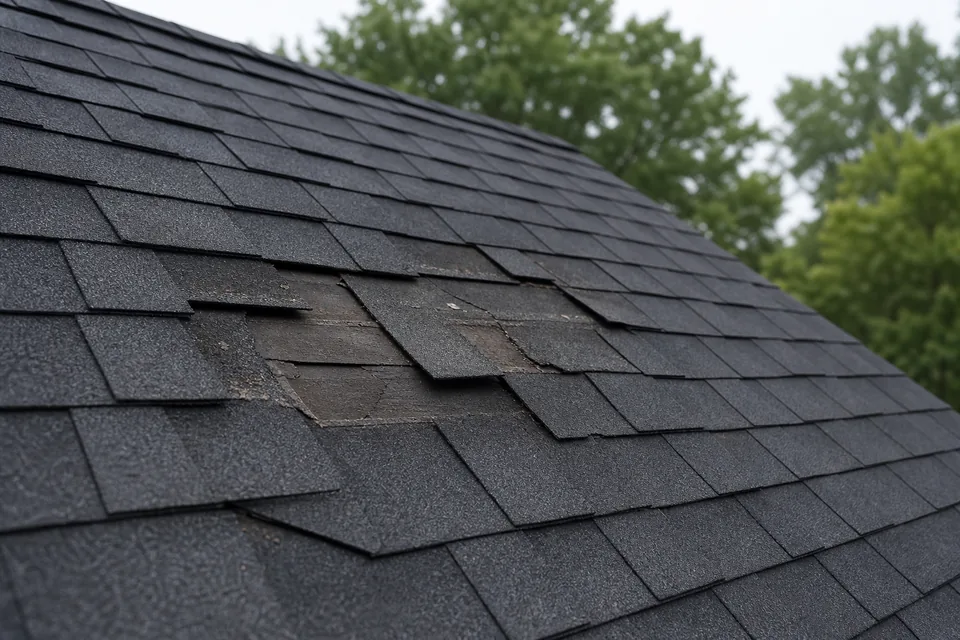
Warning signs
Quick facts
Service scope
The final written scope should be property-specific, but these content blocks make the inclusions and limits easy to compare.
Affected roof areas, nearby materials, transitions, accessories, and relevant interior evidence.
Clear images tied to roof elevations, findings, priorities, and recommended work.
Materials, quantities, access, exclusions, possible changes, and completion expectations.
Completed-area photos, cleanup confirmation, maintenance notes, and applicable warranty documents.
Our process
The exact scope changes by property, but the decision process stays consistent.
Identify the date and direction of the weather event
Inspect representative roof slopes and accessories
Separate storm conditions from age or installation issues
Document and repair the confirmed roofing damage
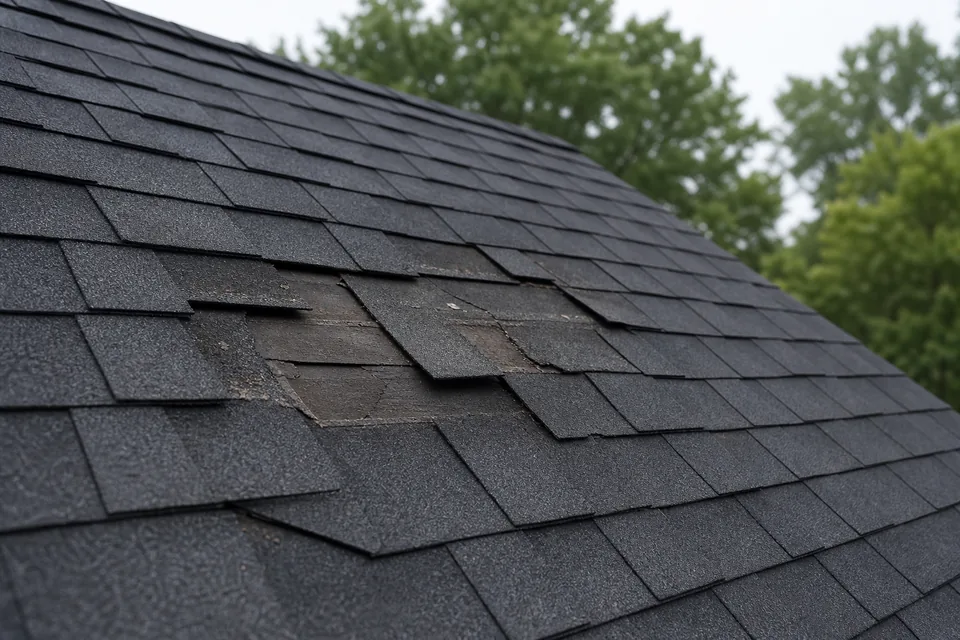
Scope options
A complete scope should name the materials, warranty options, relevant crew qualifications, and limitations offered by the contractor.
Project proof
Use one authentic local project with the starting condition, approved scope, completed work, service date, location, and homeowner permission. AI imagery must never be presented as a real project.
Common questions
Usually not reliably. Hail effects often require a close, hands-on inspection of shingles and roof accessories.
Not automatically. Repairability depends on surrounding condition, material availability, roof age, and how broadly the wind affected sealed shingle edges.
Service areas
Related guidance
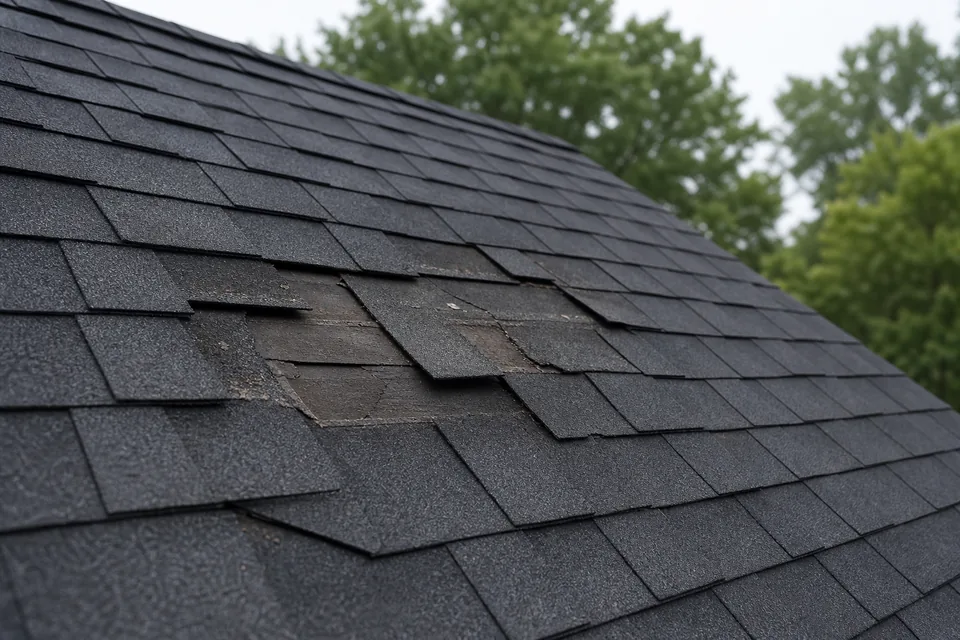
The safe sequence for documenting a hail event, limiting damage, and arranging a roof inspection.
Read guide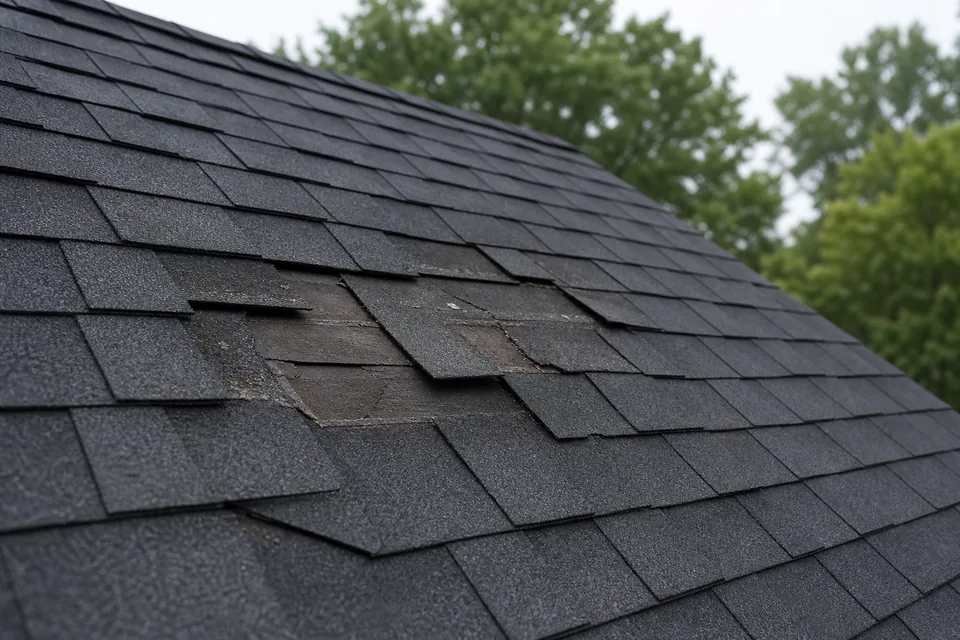
Why creased, lifted, and unsealed shingles may matter even when they remain on the roof.
Read guideRelated services
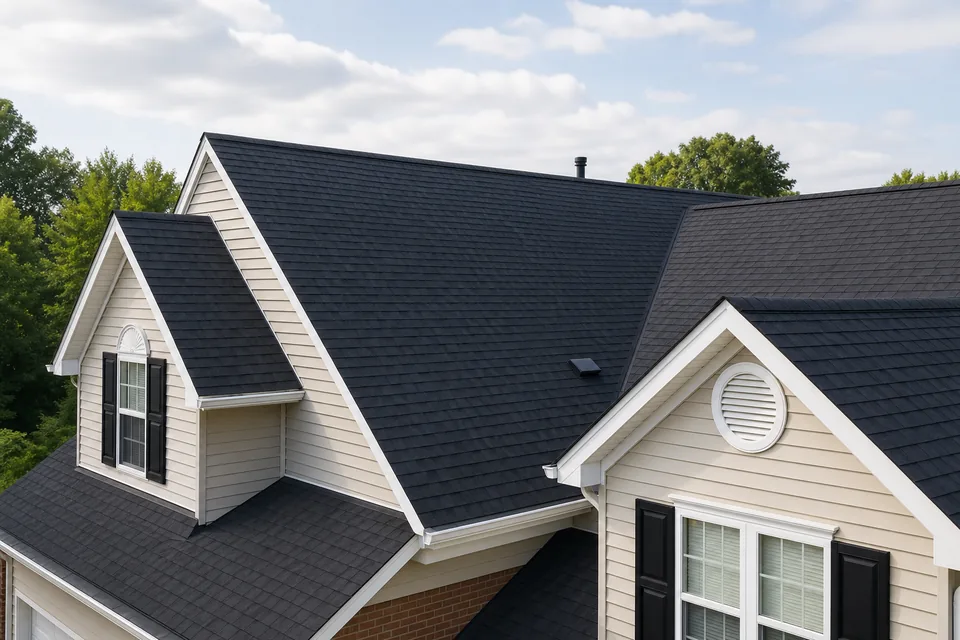
Targeted repairs for shingles, flashing, vents, valleys, and other isolated roofing problems.
Explore service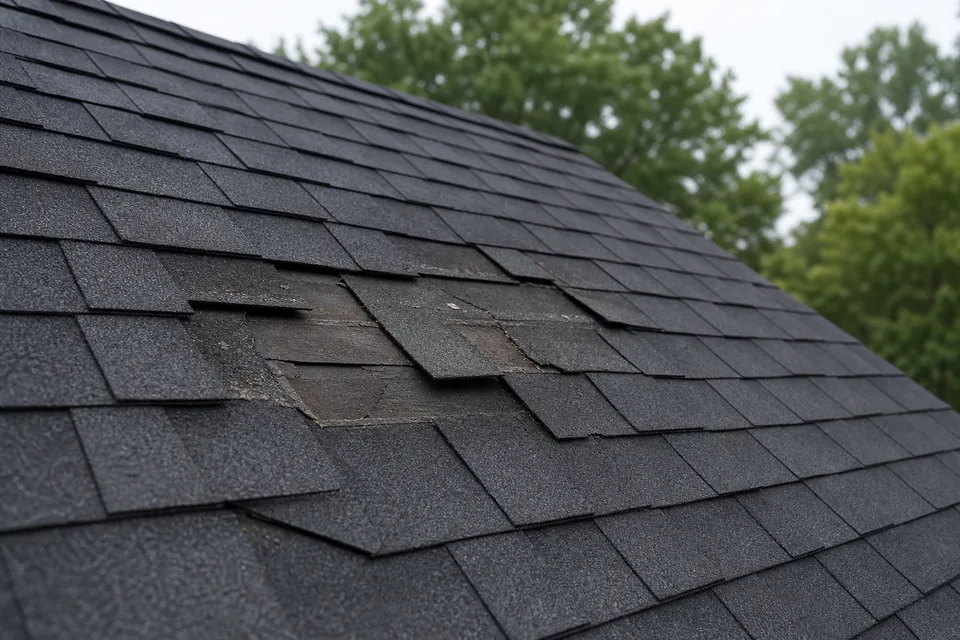
Inspection, emergency protection, documentation, and repairs after wind, rain, hail, or falling debris.
Explore service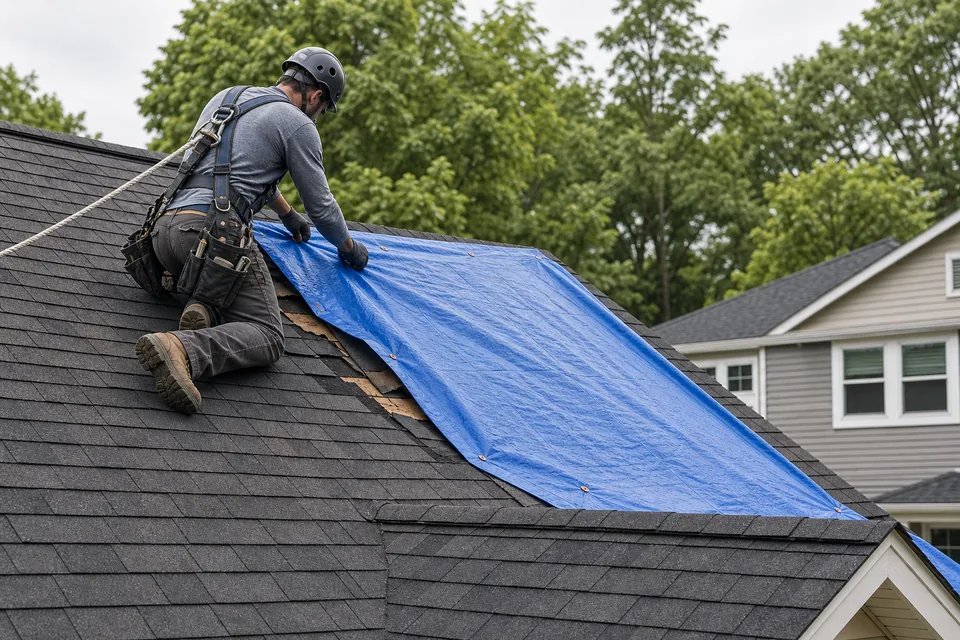
Temporary weather protection designed to limit additional exposure until permanent repairs can be completed.
Explore serviceBefore the visit
Responsive roofing help
Start with a documented inspection and a clear next step.